Thursday, October 18, 2012

Carson & Colorado Railway: Bill of Lading for Cyanide


Carson & Colorado route map
Note route within Nevada from Hawthorne, just south of Walker Lake, north to Moundhouse, just east of Carson City.

The Carson and Colorado Railway was a narrow gauge railroad that ran through eastern Nevada down to Keeler California.   It was incorporated on May 10, 1880 as the Carson and Colorado Railroad, and construction began that month. 3 ft  gauge track was used to keep costs down.  The railroad was sold to the Southern Pacific Company in 1900, which was bad timing for the C&C's original investors, who by 1900 had given up the road's profitability.  Silver and gold was discovered at Tonopah, Nevada and Goldfield, Nevada, and provided major revenues shortly after the Southern Pacific purchase.   


*****


Carson & Colorado bill of lading for a box of cyanide samples from Hawthorne, Nevada to Moundhouse, Nevada.  An agent at Hawthorne with the initials C.P.M. receieved the consignment and canceled the stamp on April Fools Day, 1899.


Mining and Cyanide

Why a shipment of cyanide on the Carson & Colorado?  Cyanide is produced in large quantities for the mining of gold and silver.  Cyanide is used to dissolve silver and gold ore.  Finely ground high-grade ore is mixed with cyanide.  Low grade ores are piled into mounds and sprayed with a cyanide solution.   The precious metals then form soluble derivatives.

The solution containing these ions is separated from the solids, which are discarded to a tailing pond or spent heap, the recoverable gold having been removed.  The metal is recovered from the solution by reduction or adsorption.

Since the C&C's main business came from mining silver and gold, cyanide was likely a common item of freight on the line.

Wednesday, October 17, 2012

Denver & Rio Grande Railroad


The Denver & Rio Grande traversed the Rocky Mountains and offered some of the most dramatic scenery of any railroad ever built.  Salt Lake City is at the upper left, with Denver towards the upper right.  Santa Fe is at the bottom.

The D&RG would be come a part of the Gould system


D & R. G. R. R.
NOV   10   1899

Langlois scan


Tuesday, October 16, 2012

Wabash Railroad


See the 1940s era Wabash Railroad video below.


THE WABASH
MAR
17
1899
R. R. CO.

Langlois scan


Wabash RR 1887 system map


Monday, October 15, 2012

Nickel Plate Road

There is trove of old railroad videos available on YouTube, and while obviously none were produced before or during the 1898 tax period, many long-lived railroads from the 1898 period produced promotional videos during the mid-20th century.  Below is a video produced by the Nickel Plate Road Railroad, known in its original incarnation as the New York, Chicago & St. Louis.


N. Y. C & St. L.
JUN 15   1899
R.  R.  Co.

Langlois scan


Sunday, October 14, 2012

Auctions: Scott Listed 1898 Documentary Provisionals: Rarity + Poor Condition = Low Sale Prices

The early October Siegel sale of the Dr. Alexander Schauss collection of United States Revenues included examples of the R150s documentary provisionals:  R156, R157, R158 and R158A.  All the stamps were flawed in some way, with a major visible crease on R156 among other flaws like damaged perfs and thins on the other stamps.  As such, one would expect discounts for these stamps in the final sale price relative to the Scott values and the spate over the last few years of sales of this material.  But given the rarity of these stamps, I figured the final prices would be much more robust than the ultimate results. 


R156 with heavy crease run horizontally across the stamp
Scott Value:  $5,750
Sold for: $850

R156 sold for nearly 1/7 of its Scott value, an incredible discount for even a very flawed copy of this rare stamp.

As for the other provisionals, values and sale prices went as follows:

R157:  Scott $4,500; sale $1,100
R158:  Scott $6,750; sale $3,750
R158A:  Scott $12,500; sale $5,250

I won't speculate as to whether there is a trend here.  Visit the StampAuctionNetwork page with these stamps by clicking here. 

Saturday, October 13, 2012

On Beyond Holcombe: Park & Tilford

On Beyond Holcombe, by Malcolm A. Goldstein, appears on Sundays at 1898 Revenues:


PARK & TILFORD,
JAN  17  1899
NEW YORK.

With the examination of Park & Tilford, this study focuses on a different type of user of battleship revenues, and brings another area of merchandising within its ambit, for P & T was a high end grocer in New York City, the Fairway or Dean & DeLuca of its day. In an era where retailing was less specialized than it is today, the inventories of grocery stores and drug stores often overlapped, and grocers offered their customers liquor, tobacco, candy, patent medicines and perfumes as well as meat and vegetables. The Company’s “P & T” cancel therefore appears on many values of the Battleship Revenue series and in many different typefaces. In addition, the P & T enjoyed a long and hardy life well beyond the Spanish-American War. Because of its longevity, P & T cancelled stamps when the taxes were revived to help finance World War I, and its name and corporate structure ultimately outlived its retail outlets


P & T was founded by Joseph Park and John Mason Tilford in 1840. Park, born in 1823 in Rye, NY, just north of New York City, was the son of a farmer. Tilford came from further upstate. He was born in 1815 in Argyle, NY, northeast of Albany, NY, and was a minister’s son. They both chanced to become clerks in the same grocery business in New York City, and soon decided to strike out on their own, opening their first retail grocery store on Carmine Street in Greenwich Village. One of the great secrets of their success was that they anticipated New York City’s rapid expansion, and kept building new locations to serve their customers as they progressed ever northward. The other key to establishing their sterling reputation was that they supplemented their outstanding stock of domestic goods and produce with the best foreign goods they could import, such as Crosse & Blackwell products from England, cigars from Havana, as well as choice candies, liqueurs, cognacs, brandies and perfumes from France.
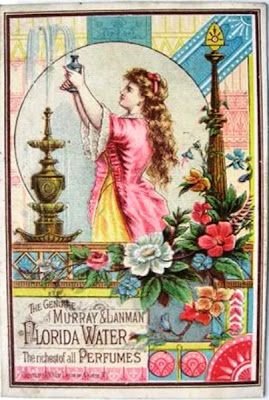


By 1886, they were operating four retail locations in New York City as well as a branch store in Paris, which served as their merchandising depot for exporting goods to the United States. A contemporary publication of the time noted that P & T was an establishment “the very sound of whose name makes epicures’ mouths’ water.” They served as grocers to the prominent and famous. Thomas A. Edison’s assistant later noted specially in his memoirs that Mrs. Edison herself in Menlo Park, NJ ordered both groceries and delicacies from P & T. The flagship store, facing the Plaza Hotel and Central Park on Fifth Avenue near Fifty Ninth Street, was constructed so beautifully in 1883 with the latest of electric and gas fixtures that the Times extolled it as the “very beau ideal of what a first class grocery store should be.” As well as retailing to the general public, P & T developed a wholesale business as the provisioner for hotels and restaurants in New York City. P & T’s company headquarters were maintained at the end of the Nineteenth Century at 21st Street and Broadway, and the firm then employed between 350 and 400 workers as well as 100 wagons and horse teams to make prompt deliveries citywide. In 1890, P & T was a big and complex enough operation to warrant incorporation under the laws of New Jersey. Park became President of the Corporation and Tilford its Vice-President.

As it seems with many businesses that begin as partnerships, the first name, Park, appears to have been the outgoing personality and Tilford the more retiring. Among his business involvements, Park served on the board of directors of the Bank of the Metropolis in the company of such business luminaries as Charles Tiffany of Tiffany & Co, jewelers; Hicks Constable of Arnold & Constable, clothiers; William Steinway of Steinway & Sons, piano makers; W D Sloane of W & J Sloane, furniture dealers, and other notables including the President of the Delaware, Lackawanna & Western Railroad. He also served on the boards of the Plaza Bank and the New York County Bank and was a director of the New York, New Haven & Hartford Railroad. He was a member of the New York City Chamber of Commerce and, together with his son, the New York City Produce Exchange. Near the end of his life, his testimony before a Joint Committee of the New York State Legislature, as well as his son’s, concerning veiled threats made by the American Tobacco Co to cut P & T off as a supplier of its tobacco products was memorialized in that Committee’s 1897 Report recommending stiff state laws to control trusts, like the tobacco trust, after noting that the efforts of federal authorities to enforce the Sherman Antitrust Act of 1890 had been thwarted by the 1895 ruling of the United States Supreme Court case of US v. E. C. Knight Co that sugar refineries were a local or intrastate business which could not be governed by federal law that applied only to businesses conducted in interstate commerce.


In his private life, Joseph Park showed as much acumen and determination as in his business dealings, highlighted by his repurchase of his father’s farm in Rye, NY which he then grew into a large Westchester County estate nestled among other such privileged tracts. He was a member of several fashionable social and yacht clubs as well as the Museum of Natural History. While he lived on until 1903, ill health ultimately forced him to relinquish control of his interest in the partnership to his son, Hobart, during the early 1890s. The second name in the partnership, John Tilford, although also regarded as an able and adroit businessman who served on the board of directors of two different banks than Park, was described in his obituary as a man of “domestic habits” who “did not belong to any societies or clubs.” Tilford died in 1891, passing his share of P & T to his son, Frank (1852-1924).

The next event in P & T’s evolution is actually a non-event, which is chronicled in the history of one of today’s eminent Wall Street law firms, although handled by one of its predecessors. The law firm conducted elaborate but fruitless legal negotiations in 1896 concerning the sale of P & T - possibly initiated at the behest of Frank Tilford - to a London based concern through an offering on the London stock exchange. These unsuccessful talks are mentioned by the law firm to illustrate the extremely poor business atmosphere which prevailed in the United States after the Panic of 1893 and before the election of McKinley in 1896 (although it also tacitly demonstrates how law firms themselves stay in business and generate revenue in poor economic times for even fruitless talks engender billable hours). Writing about a conversation with an American corporate official from a like company involved in a similar putative sale unfolding at the same time as the P & T negotiations, the lawyer reported to his potential English buyer as the 1896 election drew near:

He then said that business all over the country was extremely bad ... that grocers all over the country were only ordering one-half of what they had been accustomed to buy, evidently preferring to wait until the results of the election to commit themselves ... He found the wholesale grocers were afraid to give credit; because, if the election went against McKinley, there would be many failures.
Once McKinley was elected, the specter of imminent social upheaval threatened by William Jennings Bryan and the Democratic Party quickly blew over, and the need for grocers to make a hasty exit from their industry passed. Bolstered by the Alaska Gold Rush, the Gilded Age resumed its stately waltz, not to be disturbed again until the Panic of 1907. The younger Park and the younger Tilford managed to “stay the course” and were “firmly in the saddle” when the battleship revenues were used.

However, the next stage of P & T’s own corporate history began with Hobart Park’s sale of his interest in the company to Frank Tilford in 1906. (Hobart Park (1855-1948) spent the rest of his very long life parleying his father’s real estate holdings in Westchester into its own separate sizable fortune.) Frank Tilford carried P & T forward in the new century. Perhaps the height of the Gilded Age was simply the acme of the era of civic biographies, or perhaps inherited wealth draws forth more distinguished roots even in the egalitarian United States, but Frank Tilford, as an officer of P & T, seems to have received the lavish praise and handsome portraits in books like Men of the Century: An Historical Work Giving Portraits and Sketches of Eminent Citizens of the United States (1896) and The Successful American (1899), that neither the senior Park nor the senior Tilford, as humble and resourceful grocers, ever merited. In an 1896 biographical sketch, Frank, not his father, disclosed that the Scottish family name dated back to 916 A.D. when the appellation Tilford - derived from the phrase meaning “sword’s edge” in Norman French - was earned by a particularly warlike and brave primal ancestor who slew a barbarian king in battle. To emphasize the family’s exalted roots, Frank added that his mother’s family’s first ancestor in the United States was among those who had crossed the Atlantic on the storied Mayflower, landing at Plymouth Rock in 1620. Frank made up in directorships of banks and other enterprises, as well as social clubs, what his father lacked. However, he firmly disavowed any interest in entering into politics and “declined all offers to enter public life.”

As well as building and opening more retail P & T branches, Frank made a number of other significant changes in company operations. Perhaps the earliest and most striking modification he made was that he began to run ads for P & T, an event, an advertising trade journal commented in its June 26, 1907 issue, that: “stir[red] the blood ... in publishing and mercantile circles [by] breaking of a non-advertising policy that has characterized this house for sixty-five years.” While happy that P & T was now spending a sizable advertising budget, the article explained that P & T characterized its outstanding trait as “reliably.” Yet “Park & Tilford had never until last year, gone even to the length of stating that they are reliable. The public has been left to find this out and has found it out in the course of three generations, for this house has today a prestige in the grocery field not a whit less impressive than Tiffany in jewels.” Like Hobart Park, Frank also became interested in real estate. He channeled his enthusiasm and acumen to becoming a member of the New York City Real Estate Exchange, although he concentrated on the more northerly reaches of Manhattan rather than Westchester. In keeping with that interest in northern Manhattan real estate, Frank also moved the company’s headquarters uptown to Harlem at 310 Lenox Avenue (corner 126th St), a building now preserved as an historic landmark and today occupied by the National Basketball Players Association. Frank also supervised in 1921 the construction of a seven story candy factory in the middle of a complex of warehouses combined with a garage and a stable occupying the western ends of 42nd, 43rd and 44th streets in New York City.


In 1923, perhaps sensing his end was near, Frank Tilford sold P & T to David Schulte, an entrepreneur who had already made the first of his several fortunes in the tobacco industry and owned his own chain of retail tobacco stores. At one point, Schulte had the idea of making P & T a national chain grocery store. In 1928, he set up a P & T subsidiary company capitalized at $20,000,000 to accomplish that purpose, but the Depression squelched those thoughts and ultimately entirely choked off the fixed retail store location end of P & T’s business. However, Schulte had other ideas to carrying P & T in new directions. Throughout Prohibition, P & T marketed candy and introduced new perfumes, and Schulte, perhaps thinking ahead, even briefly experimented between 1925 and 1927 with ownership of the Old Overholt & Large liquor distilleries (which were serving as bonded internal revenue service liquor warehouses during Prohibition) together with their huge stocks of aged rye whiskey. When Prohibition ended, P & T marked the date of December 5, 1933 with chartered ships full of Europe’s best whiskies, wines and cordials on the ocean readily to land their copious cargoes in New York and San Francisco to “re-wet America’s whistle” as well as aid the rich and well-to-do with the necessary business of re-stocking their liquor cabinets. The New Yorker Magazine of the time gushed that those chartered ships were to be re-painted to P & T’s specifications, but the first had to leave Europe so quickly to make the long voyage to San Francisco on schedule that there was insufficient time to do the re-painting. Apparently finding that aspect of the liquor trade experience particularly satisfactory and profitable, Schulte decided to concentrate on the liquor manufacturing business after Prohibition ended. He gathered a number of small, old distinguished American distilleries under the P & T brand name, making it a significant label in the liquor business from the 1930s to the 1950s. Much of the extant P & T advertising material, particularly its large and colorful weekly ads in Life magazine, date from this period.


Schulte died in 1949, leaving his own two merchant prince sons in charge of P & T. In 1954, they sold P & T to Schenley Industries, Inc., which ultimately merged P & T into itself in 1958. The P & T name seems to have disappeared in the United States after this merger, but the Canadian division seems to have continued to exist as Park & Tilford, Distilleries Ltd. After this time, however, the P & T name seems to have been swallowed into the vortex of corporate consolidation on an every swifter and grander scale. Schenley Industries was purchased in 1968 by Meshulam Rickles, an Israeli industrialist probably more memorably identified in the public mind with his efforts to make Pia Zadora a star than with his high wire financial maneuvers. Rickles sold Schenley to Guinness & Co, the Irish brewery in 1986. Guinness, in turn, rolled Schenley together with another acquired distillery group, Distillers Company Ltd, which included such brands as Johnny Walker, Dewar’s and Haig & Haig (and had earlier marketed Thalidomide through its pharmaceutical branch), into United Distillers Ltd in 1987. United Distillers itself merged with another giant food and liquor holding company, Grand Metropolitan PLC, to create the mega-corporation Diageo PLC in 1997. When created, Diageo encompassed food holdings as well as liquor interests, but antitrust, as well as brand consolidation considerations, caused it to sell its food holdings entirely. Those food brands included such well-known and everyday names as Pillsbury Foods and the Burger King Corporation. Diageo today is a worldwide, multi-national alcohol conglomerate. Many of these complex mergers, especially the 1958 transaction in which P & T was absorbed into Schenley Industries, and the 1986 transaction between Guinness and Distillers Co which created United Distillers, were fraught with complex litigation over the respective rights of the various shareholders and, particularly the 1986 transaction, (which led to criminal charges as well), the legitimacy and legality of the inducements offered to them to make the transactions happen.


While individuals such as Schulte and Rickles could themselves be subjects of more searching examination for the vast array of offbeat details that reveal their characters, they lie beyond the scope of this study. P & T’s name is most concretely memorialized in the buildings in New York City associated with it, not only the one in Harlem, but also its former store at the corner of 72nd Street and Broadway, which is today a mixed residential and commercial building. Other sturdy structures remain as the Messrs Park and Tilfords erected them, but they have been namelessly re-purposed. P & T has passed into the collective stream of conscience as the place where the author Henry Roth’s protagonist Ira worked in Roth’s autobiographically tinged Mercies of A Rude Stream, as well as lending its name to the saxophonist Ben Webster’s “Park & Tilford Blues.” Perhaps most significantly, through a 1969 endowment by Schenley Industries of a garden on or near the former Park & Tilford Distillery grounds in North Vancouver, British Columbia, Park & Tilford has become a name associated with a popular multi-faceted garden, a shopping center and a geographical Canadian neighborhood district.

2 Cent Battleship First Day of Use

Bob Hohertz is searching for examples of the 2 cent battleship used on July 1, 1898, especially on documents and checks.  I do not have any examples, but I do have one interesting off document cancel, which combined with other dates does a solid job of confirming that the Michigan Central Railroad clearly was supplied with ample quantities of the 2 cent battleship prior to July 1.  Below is the first month of Henry Tolman's 2c battleship calendar, replete with Michigan Central cancels including July 1:


Michigan Central July 1898 cancels from this calendar include the following dates:

July 1
July 2
July 4
July 14
July 16
July 22
July 23
July 30
July 31

If you have examples of the 2 cent battleship canceled on July 1, 1898, especially on piece, please contact us at 1898revenues@gmail.com.

Thursday, October 11, 2012

Insurance Companies: Northwestern Mutual Life Insurance


605-623 North Broadway
Milwaukee, Wisconsin

Northwestern Mutual Life Insurance Company Headquarters
1886 - 1914

Northwestern Mutual Life Insurance Company was founded in Janesville, Wisconsin, in 1857 as the Mutual Life Insurance Company of the State of Wisconsin.  Chartered in March of the same year, the firm issued its first policy in November 1858, and in the following year moved operations to Milwaukee.  The company grew rapidly during the late nineteenth and early twentieth centuries.  During the tenure of Henry L. Palmer, president from January 1874 to July 1908, Northwestern Mutual became one of the largest insurance firms in the nation.

Northwestern Mutual remains in business to this day as a +$20 billion corporation in Milwaukee.

******

After a few years of accumulating of 1898 revenue stamps, one is bound to end up with at least a few examples of stamps cancelled N.M.L.I. Co., for the Northwestern Mutual Life Insurance Company.  Below I have one example of a stamp handstamped N.W.M.L.I. Co., but this acronym with the W included seems to less common.


manuscript:
N. M. L. I. Co.
Jun 3
1901

Langlois scans


handstamp:
N. M. L. I. CO.
JUL  29   1898


handstamp:
N. M. L. I. Co.
DEC   11   1899


handstamp:
N. W. M. L. I. CO.,
SEP      25      1899
J.  F.  Paton,  Gen'l  Agt. xxxx


Wednesday, October 10, 2012

Chicago Board of Trade Members: Montague & Company


MONTAGUE & COMPANY,
JUL
11
1900
CHICAGO

Langlois scan


By the end of 1900, Gilbert Montague, CBOT Member #3755, was listed as deceased in the CBOT annual report.  George Carhart, #6025, was the company President by this time.  Montague & Company were commission traders on the CBOT.

From The Book of Chicagoans, 1905:

George Tappen Carhart: President. Montague & Co., commission merchants; b. Chicago, Oct. 17, 1871; s. Richard L. and Lucinda A. (Smith) Carhart; ed. public schools; m. Chicago, Sept. 19, 1894, Susie P. Page; 1 daughter: Dorothy Murray. After leaving school in 1888, entered employ of Montague & Co., commission flour, grain, millstuffs, etc., as office boy, and has continued in the same house ever since; incorporated, 1896, and has since been President. Republican. Mason. Office: 6 Sherman St. Residence:
Waukegan, 111.


Tuesday, October 9, 2012

Chicago Board of Trade Members: John H. Wrenn & Company


JOHN. H. WRENN & CO.
JUL
15
1899
CHICAGO.

Langlois scan

John H Wrenn was CBOT member #2041.  He was listed in the 1900 membership list as a dealer in stocks, grain, and provisions.

The New York Times, May 14, 1911:


Monday, October 8, 2012

Chicago Board of Trade Members: Young & Nichols


Young & Nichols.
JUL
25
1900
CHICAGO

Langlois scan

A. Nelson Young, CBOT #1769
George R. Nichols, CBOT #2433


The application of the new 1898 war taxes was not initially clear to some of those that were responsible for paying them.  In the case of the Chicago Board of Trade, a committee was created to discuss and analyze the issue soon after the taxes were passed.  George R. Nichols, of the CBOT firm Young & Nichols, was on that special committee.  From The New York Times, June 25, 1898:


Battleship First Day of Use: The 2 Cent Documentary

Just a reminder that Bob Hohertz is searching for examples of the 2 cent documentary battleship on piece, especially checks, used on July 1, 1898.  His original post soliciting examples can be found by clicking here.  If you know Bob, email him directly; otherwise send a scan of your check/stamps or a notice of them to 1898revenues@gmail.com.  Thank you!

Sunday, October 7, 2012

New York Stock Brokers: James McGovern


JAMES McGOVERN
& CO.

Langlois scan


New York Times, November 7, 1909:


Saturday, October 6, 2012

On Beyond Holcombe: Oakland Chemical Company

On Beyond Holcombe, by Malcolm A. Goldstein, appears on Sundays at 1898 Revenues:


Beginning about 1881, the Oakland Chemical Co produced hydrogen peroxide in the United States and sold it as the company’s principal product, first under its generic chemical name and then later as Dioxogen, an appellation difficult for the company to defend as a trademark because Dioxogen was merely descriptive, but sustainable as a trade name against unfair competition, and, as such, useful as its product’s brand name from approximately 1901 to circa 1930. Quickly passing from the legalities of Dioxogen as a brand to chemistry, hydrogen peroxide is a cousin of water. Water’s chemical formula is H2O, a single oxygen atom bonded with two hydrogen atoms. Hydrogen peroxide’s formula is H2O2, two oxygen atoms bonded with two hydrogen atoms. While a hypothetical free oxygen atom in nature normally quickly forms a double bond with another free oxygen atom to become the chemically low-reactive oxygen gas, O2, the structure of hydrogen peroxide turns upon that oxygen atom forming only a single bond with the other oxygen atom and each of those two oxygen atoms also forming a single bond with a hydrogen atom. That single, rather than double, oxygen-oxygen bond gives hydrogen peroxide unusual properties. While it has turned out to be a normal, naturally occurring substance, present in virtually every cell at some point during the respiratory cycle, the existence of that extra oxygen atom in its structure makes it highly reactive. Collected in measurable amounts, because the release of the extra oxygen atom is so quick under certain circumstances as to cause burning, nowadays in low concentrations it is used as bleach and, in the highest concentrations, as rocket fuel.


Presently, as in Oakland Chemical Co’s time, controversy surrounds hydrogen peroxide’s use as medicine. The approximately 3% hydrogen peroxide solution sold by the Oakland Chemical Co as Dioxogen was initially sold as a cure-all for everything, but gradually, under the general pressure of the medical reformers to rein in over-exaggerations, the company narrowed its advertising focus to promoting its use as a mouthwash and disinfectant. While current opinion still supports such use, modern research has slightly modified the usage rules. For example, while FDA guidelines accept hydrogen peroxide as mouthwash, prolonged use of hydrogen peroxide as mouthwash seems to actually damage and weaken tissue and, again, the oxidation accompanying its strict use as a wound disinfectant may cause scarring and slow healing by damaging newly forming skin cells. Thus, hydrogen peroxide should be classified not so much a disinfectant as an antimicrobial agent, particularly with respect to those organisms which are anaerobic and cannot survive in the presence of oxygen. As an antimicrobial, it is properly recognized as a germ fighter. Yet even today, curiously, outside of these narrowed strictures, a number of websites tout hydrogen peroxide almost as the miracle drug that Oakland Chemical Co first advertised it to be, capitalizing on its oxidizing properties, and claiming that its ability to capture “free radicals” makes it a potent defense against aging and less well understood conditions such as multiple sclerosis and even cancer.


Aside from its abundant advertising, little factual remains on the record concerning the Oakland Chemical Co as a working business. It began operations in Brooklyn, NY and later moved its main office into Manhattan. Its factory was in the Rossville section of Staten Island and the site is considered today by some to be a toxic dump. Among its officers, only two can now be traced even slightly. One officer, H. M. Horr, its sales manager around 1910, left columns on the art of advertising in a printing trade journal, on such subjects as individualizing stock advertising circulars by personalizing the creation process. Horr suggested selecting one name from each group of customers on a mailing list and writing the circular as if it were a personal letter directed to that person. By this means, together with terse prose and keeping the number of issues addressed narrowly focused, the copy writer could capture the specific needs of that particular group of customers. To get around having the circulars look generalized and generic, he recommended specially printing them in type resembling typewriter type, then individually adding the addresses to the circulars by typewriter, and employing women to mass sign them to complete the personal feel: “Sign your letters with pen and ink. Cost too much? Why I have employed girls who sign letters with a good business signature from 1500 to 2000 per day at 75 cents per thousand, when the printer usually charges 50 cents per thousand for facsimile impressions.”

The identification of the other officer comes from the Congressional Record, which reproduced as part of a War Department report, a letter submitted by the other officer, one Daniel E Rianhard, who was the Staten Island Plant Manager in 1912 and, in a letter submitted to the federal Army Corps of Engineers, Board of Engineers for Rivers and Harbors, concerning the widening of the Arthur Kill Channel between Staten Island and New Jersey, supported the initiative on the grounds that it would make transport of its raw materials and finished goods easier. This person may, or may not, have been one Dane E. Rianhard, a longtime resident of Staten Island (1858-1927) who seems to have been a charter member of the Staten Island Cricket and Baseball Club as well as an avid proponent of early automobiles. Concerning the fate of the company’s product, Dioxogen, the name appears most recently to have been owned by another battleship revenue cancel user, the Henry K Wampole Co of Philadelphia (also to be visited by this series of articles in due course), but the circumstances under which the transfer of ownership occurred are not presently known. In any event, both Dioxogen and the Oakland Chemical company disappear from the published historical stream about the year 1930.

Cancels on M. Michael & Brother Bills of Lading

M. Michael & Brother returns today courtesy of Bob Hohertz who emailed me today with scans of another M. Michael & Bro bill of Lading and a cancelled stamp from an additional BOL.  Bob has several bills of lading from this firm, each with a different type of cancel on the stamp.

Of the 8 M. Michael & Bro BOLs in Bob's collection, none have the N.P.C.P. Co handstamp shown in yesterday's post.  He guesses, as does David Thompson, that the initials stand for Nashville, Paducah, Clarksville Packet Company.  After a bit of searching, I have established that there was a Nashville, Paducah & Cairo Packet Company.  On many of Bob's BOLs there are references to Cairo, Illinois.  And as you can see in the postcard at the bottom of this post, the Steamer Dick Fowler is shown docking at Cairo.  Consequently I believe the C stands for Cairo in N.P.C.P.Co. 


With regard to the name of the packet boat in yesterday's post, Bob states:  I can sorta see "Buttorft" in the scribble on your receipt, but on the one of mine that used it, the scribble looks like "Burdoff." The line also had packet boats called the "Joe Fowler," the "Dick Fowler," and the "Henry Pierce." (The scrawl on the last one looks like "Henry Prirce.") The cancels on the stamps include "Recd. Fowler Wharfboat Co." in red on some and on others, "STR. D.F.", the latter tete-beche with the date in two cases but not in a third. Others have pencil scribbles."

Two examples of the cancels that Bob refers to above are shown below:


Bill of lading for goods shipped on the Steamer Dick Fowler, with stamp canceled by Fowler Wharfboat Company.

RECEIVED
Subject to Rules of Carriers Bills of Lading
OCT 13 1898
FOWLER WHARFBOAT CO.
AGENTS


A biography of the late Captain Joseph Fowler in the volume Memorial Record of Western Kentucky, Lewis Publishing Company, 1904, pp 465-467 [McCracken] contains this little bit about the Fowler Wharfboat Company: 

Captain Joseph H. Fowler was reared in Princeton, Kentucky, and there educated in Cumberland College. In 1849, when only sixteen years of age, he started in life for himself, beginning what has been an unbroken, eventful and successful life in the wharf and steamboat business. For years he has been a conspicuous figure among those interested in navigation upon the Ohio and Mississippi rivers. Among the many financial and industrial enterprises with which he has been identified may be mentioned: The Fowler Wharfboat Company, of which he is vice president; the Evansville, Paducah and Cairo Packet Line, of which he is president. To him and his associates is due much credit for the maintenance of river navigation, and among those who have
contributed much toward the upbuilding [sic] of Paducah he has always been a prominent figure.


OCT  18  1898
STR.  D.  F.

STR. D. F. should stand for Steamer Dick Fowler.


Thursday, October 4, 2012

M. Michael & Brother, Saddlery and Buggy Wholesaler and the Steamer Bultorff


M. Michael & Brother shipped saddlery of some kind from Paducah to Pinkneyville, Kentucky aboard the Steamer Bultorff.  I am mystified by the cancel of

N. P. C. P. CO.
AUG 22
1898.

As advert from the Paducah newspaper shown below has the Steamer Buttorft (variation on spelling a mistake or different steamer?) belonging to the Ryman Line, which does not explain the initials on the cancel.  If you have an idea of what the initials on the cancel might stand for, please write 1898revenues@gmail.com.


Wednesday, October 3, 2012

The Konantz Saddlery Company


The KonantzSad. Co.
JAN  17   1899

Langlois scan

The Konantz Saddlery Company was a manufacturer of saddlery and was based in St. Paul, Minnesota.


From Little Sketches of Big Folks, Minnesota 1907:

KONANTZ Edward A, St Paul.

Residence 622 Iglehart st, office 227 E 6th Street.  Manufacturer.  Born Nov 9, 1857 in Quincy Illinois, son of Paul and Wilhelmina Konantz. Attended Quincy, Illinois public schools; graduated from high school at age of 13; from Gem City Business College.

Began work in harness factory at age of 16; member of firm of W H Konantz & Bro Quincy at 20; began retail harness business St Paul 1882; added whol dept 1884; incorporated the Konantz Saddlery Co whol mnfrs of saddlery 1889; company sold out to the Konantz-Gaver Co Dec 1905.


The Konantz Saddlery Company building in North St. Paul.


Tuesday, October 2, 2012

Battleship First Day Use

by Bob Hohertz

As readers of this blog may or may not know, I am a longtime editor of The Check Collector, the quarterly magazine of the American Society of Check Collectors.  Recently, a member of the ASCC sent me a picture of a check with a first day use of a two-cent battleship, asking if I would start an inventory of known uses.

As we know, first day use of the battleships are much harder to find than first day uses of the serif I.R. overprints.  My feeling is that they went to the smaller population centers, while the overprints went to the larger ones, but this isn't borne out by a rigorous study.  It might be useful to document the known first day battleship uses in order to get an idea of where they really were shipped. 


This first day use on a certificate of deposit hails from Virginia City, Montana.  This would be a population area large enough to get a shipment of stamps, but not a large one.  On the other hand, I have first day uses of overprinted stamps from Philadelphia, Boston, Hartford and Saint Louis, but I haven't seen first day uses  of battleships from those places.

So, please, if you would, send me listings (and 300 dpi scans, if you would) of any first day uses of the two-cent battleship and I will try to put together an inventory listing for the October - December issue of The Check Collector and link to it from here so you won't need to be a member of ASCC to see it.

Monday, October 1, 2012

Asbury Harpending and His Busy July 11, 1898 Check


As with most examples of the early use of R153, this check comes from the far west, this example from the National Bank of D. O. Mills & Company.  Darius Ogden Mills was a tycoon who built his great wealth from the Comstock Lode in Nevada, and the Virginia and Truckee Railroad built to get the silver out of Nevada to California.  He owned a self-named building in New York's financial district housing many NYSE firms.


But while the use of two R153s on a far west check and Mr. Mills' bank and his role in the US economy might be interesting, the signature on this check is from a man perhaps more intriguing than Mr. Mills or the use of the stamps.


A. Harpending signature from check


Asbury Harpending in 1915 when he was 76 years old.  

Harpending published his autobiography, The Great Diamond Hoax and Other Stirring Episodes in the Life of Asbury Harpending - An Epic of Early California, in 1917.  The stories are remarkable, including time as a mercenary "freebooter" or filibusterer in Central America, making a fortune in mining in California and Mexico, joining an 1861 attempt to create an independent Pacific Republic out of California, and backing Confederate interests during the Civil War.  His autobiography's title, The Great Diamond Hoax, speaks to his involvement in the artificial creation by seeding, of an alleged diamond mine in Wyoming in 1872. 

From the preface of his book:


On my return to California, after an absence of many years, my attention was called, for the first time, to the fact that my name had been associated unpleasantly with the great diamond fraud that startled the financial world nearly half a century ago. Plain duty to my family name and reputation compelled me to tell the whole story of that strange incident so far as my knowledge of it extends. I sincerely trust that a candid reading of these pages will satisfy the public that I was only a dupe, along with some of the most distinguished financiers of the last generation. Concerning two of the historians who maligned me, I am without redress. They are dead. The latest author, Mr. John P. Young, repeated the accusation of his predecessors in his history of San Francisco. This gentleman has admitted that he merely copied the story of the earlier works, having no personal knowledge of events at that period, and has handsomely admitted, over his signature, that he unconsciously did me an injustice.

To the diamond story I have added, at the request of friends, some of my experiences and reminiscences of California of the early days.

Asbury Harpending.