Monday, August 8, 2011

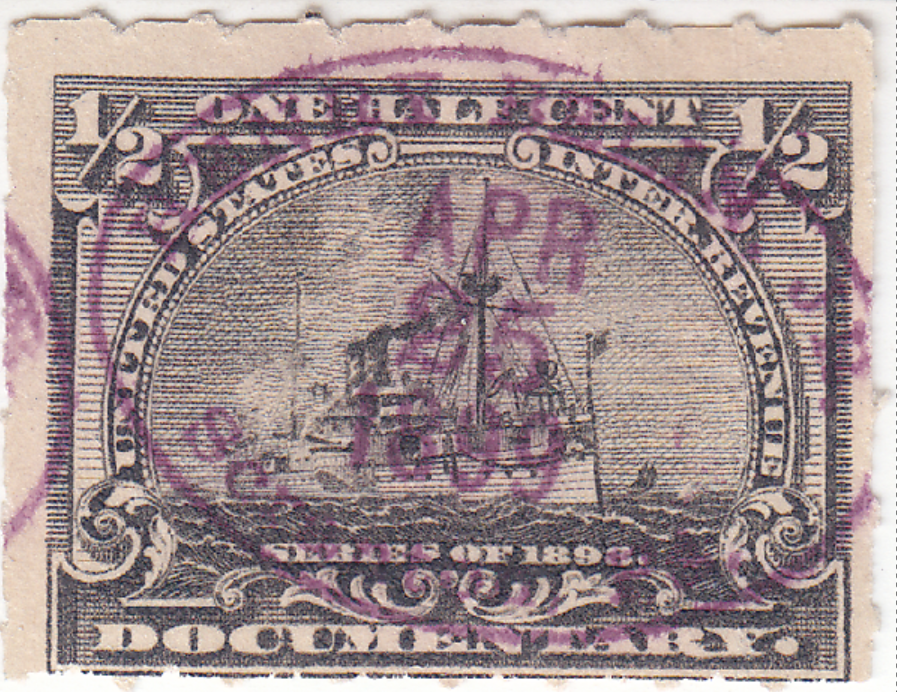
1898 Revenues. 2011 Revenues?

The United States has the lowest tax rates it has had in generations, and one of the lowest effective tax burdens in the world of developed economies.  The democracy of our great country is hamstrung by a small group of wild-eyed zealots, bound by signed documents thrust in front of them by Grover Norquist, who has never had the responsibility for the budget and the welfare of any citizen of any country anywhere in the world.

Yet here we are, an S&P downgrade only 1 business day past, and the stock market is in free fall.  For all the so-called conservatives that have pushed this absurd brinkmanship policy to test whether the US should default on its debt, I doubt one has noticed where all the money has been going that is running out of stocks.  Look at the price of US Treasury Bonds.  The yields are going down.  Investors and the market are running to US Government debt for safety and to reduce risk. 

Ponder the irony.  The capital markets are spooked by the downgrade, brought on by the dysfunction of our democracy and the willingness to play chicken with our debts.  However, capital doesn't yet actually fear the size and scope of the total debt at present.  Treasuries remain a preferred safe haven.  I believe the reason for this is that the market understands that the US has enormous and elastic capacity to actually pay off that debt if it chooses to, and in such a way that additional revenue collection threatens little the economy's future capacity to grow or produce jobs.

But those that push an aggressive and no-prisoners anti-tax policy do so with a faith-based conviction.  That there was no US deficit in 2000, and the 30 year long bond had been retired, and that our economy had been experiencing years of growth, is of little consequence to them.  Massive tax cuts were put in place, and the deficit came back.  And despite the tax cuts, our economy, and the world economy, has suffered the greatest setbacks since the Great Depression.  The revenue decline has done little to stimulate jobs.  The withering truth that neither the tax cuts or the presence of deficit raising stimulus packages has not bailed us out of our economic problems is not important to faith-based thinkers. 

If the debt matters, get it down.  Capital doesn't fear new revenue.  Our policy makers have options.  The left, and American society as a whole, needs to come to terms with unaffordable entitlement programs.  Nothing should be untouchable, including defense.  But as wingers draw their lines in the sand, increasing taxes, while decreasing defense and entitlement spending all become off limits.  These times require the moderates and compromisers to rise to the top and put some sense back into the equation of our national budget process.

The Maltese Cross Cancel of R. P. Flower & Company


Dave Thompson scan

Roswell P. Flower was a powerful man in New York.  His political career included two stints in the US Congress and a term as Governor of New York.  He owned his own Wall Street banking house, R. P. Flower & Company, and was one of Wall Streets most aggressive market bulls. 

Just why R P Flower & Co used the crosses in their cancels I can't say, though I suppose if one wasn't so familiar with the military associations of the Maltese Cross then it could look a bit like a flower.


Roswell Pettibone Flower
1835 - 1899
US Congressman, New York, 1881 - 1883, 1889 - 1891
Governor of New York, 1892 - 1894


Sunday, August 7, 2011

Cancel for August 7: Southern Iron Car Line


Southern Iron Car Line
AUG
7
1899
ATLANTA, GA.

Back home after more than 24 hours of travel.  More complex posts to come when I've recovered from two 8 hour plane rides...

Saturday, August 6, 2011

C. T. Bowring & Company


C. T. BOWRING & CO., Ltd
FEB 23, 1901
NEW YORK

David Thompson scan


Founded at St. John's Newfoundland in the 1820s by Benjamin Bowring who was greatly involved in the sealing trade, by 1823 he owned a fleet of small sailing vessels to trade across the Atlantic.  By the 1840s, his son, Charles Tricks Bowring was the functional head of the company which had expanded to Liverpool.  The 1860s saw rapid growth in the company with routes opened to India and New Zealand, Australia and West Coast of America.  From 1880 the built up a fleet of ocean going steamships and a new company, English & American Shipping Co. Ltd was formed in 1888 to operate passenger and cargo services, mostly between Liverpool, St. John's, and New York.  They also operated the Red Cross Line from the early 1880s, which ran a passenger and freight service along the Atlantic seaboard to New York and later expanded into the cruising business out of New York.


Wednesday, August 3, 2011

Buyer Beware!


Current R163 offering on Ebay


Coincidence?  Two days ago I browsed the APS sales website for the first time, and found an R163 pair listed as an imperforate, or more accurately, imrouletted pair, and with a catalog value of $500.  Lo and behold, today, Stuart Katz has put up a block of R163 and lists it as an imrouletted block, this time with a catalog value of $1000, and buy it now price of $450.

In both cases these are not imperforate or imrouletted stamps.  These are part-perforate or part-rouletted stamps, and only on the horizontal.  The vertical rouletting can be clearly seen in the scan above, for example.  I don't have a copy of the Scott Catalog with me right now, but pairs of part-rouletted R163 should be listed for $8.  Yes, eight, and not hundreds of dollars. 


Partially rouletted R163s are common, and I have seen many pairs and blocks.  The referenced imrouletted copy is the only one I have ever seen.

Stuart Katz's errant listing on Ebay can be found here.  The APS responded quickly to an email I sent and wrote they would take the listing down. 

Travel Day

We are on our way back to Kenya today and will arrive late Saturday night.  Back online in a day or so...

Tuesday, August 2, 2011

The Telephone Tax: Hand Delivered Messages

On Monday I wrote about an IRS webpage that referred to the telephone tax that was begun under the 1898 war tax act.  Over email, Bob Patetta and I have speculated about how this tax was paid.  I have guessed that in the case of the $50 revenue stamp highlighted in Monday's post that companies like AT&T would bill large users like big corporations for the tax and then bundle and pay the tax the government themselves, in which the case the use of the large documentaries makes sense.

Bob sent me scans of two instances where the tax was paid for a single telephone call.  In these examples, the telephone call was made to an operator on the receiving end who then wrote a message on paper and delivered the message to someone who did not have their own phone.  In 1899 most people did not have phones, and this was likely a common way to transmit phone messages.


Bob speculates that the one cent telephone tax was more often charged on an individual transaction basis in smaller markets.

Monday, August 1, 2011

Henry Belin Jr. Part 2

A few days ago, Dave Thompson sent in this scan of stamp cancelled by Henry Belin Jr.:


HENRY BELIN, JR.
APR
25
1899
Scranton, Pa.

 
Back in January 2010, I first posted a cancel by Henry Belin Jr.   At the time I knew that Belin was an executive for DuPont, but didn't know why he might have been using his own handstamp cancel.  Below is the stamp I posted in 2010, with a much clearer cancel than the one above on the 1/2 cent stamp:

HENRY BELIN, JR.
JAN
24
1899
Scranton, Pa.

The presence of this cancel on Dave's 1/2c stamp practically confirms that Belin was involved in the insurance business.  Almost all half cent stamps were used for paying taxes on insurance, and it appears that the half cent stamp above received Belin's cancel while still in its intact pane and not on the document.  Belin or his firm were likely issuing multiple policies that called for half cent stamps, and they cancelled half cent stamps in bunches.

Sunday, July 31, 2011

The IRS Website and 1898 Taxes

Everybody's favorite website, IRS.gov, has a series of webpages on Understanding Taxes for students.  Under the subject, the WHYS of TAXES, Theme 5: Impact of Taxes, Lesson 1: How Taxes Influence Behavior, there is an historical tax question on the first time telephones were taxed.  The question is phrased as follows:

Which of the following items was first taxed as a luxury in 1898, at the start of the Spanish-American War and continues to be taxed today?

A.  The phonograh
B.  The telephone
C.  The automobile
D.  The radio

The answer is B, the telephone.

IRS.gov webpage screen capture


I don't exactly know how these taxes were paid, but AT&T used many high value documentaries:


We all continue to pay telephone taxes with roots in the 1898 law.  It is hard to imagine today that phones could ever be considered a luxury, though their ubiquity has certainly taken their everyday use beyond essential.  Sexting is somewhere in the luxury, if not vice, category.  I don't know the law, but I wonder when, for tax purposes, the telephone tax ceased to be considered a luxury tax.

Friday, July 29, 2011

Cancel for July 30: Karl O. Cyrus


K. O. C.
7-30-98
Bridgeport, Ct.

Penciled notes by Henry Tolman

Listing can be found in extension section of the Chappell/Joyce list


The Bridgeport Telegram, Friday, April 8, 1955:

Born in Norrkoping, Sweden, Jan. 23, 1867, Mr. Cyrus came here in 1888 and first established a pharmacy at 415 Fairfield avenue. He moved to the Fairfield-Courtland corner in 1909 where he remained until his retirement.  He formerly resided at 32 Hazelwood avenue.

Described in the Pharmaceutical Journal some years ago, was "Cyrus' Pretty Fountain." It was of white marble with green marble trimming. During his term as treasurer of the Connecticut Pharmaceutical association, Mr. Cyrus was the winner of an American Druggist contest for the best set of advertisements for a retail drug store.

At the time Mr. Cyrus opened his pharmacy, Fairfield avenue was so dusty he suggested to the city that the asphalt "be wetted down every night when there are no teams or bicycles on it;" a father of night street sprinkling.

Mr. Cyrus had the first street lights in the city installed in front of his store at
his own expense.

A member of the Masonic fraternity since 1889, he was in Corinthian lodge, 104, AF and AM; Jerusalem Council, 16, R and SM; Jerusalem chapter, 13, RAM; Hamilton Commandery, 5, KT; Lafayette Consistory, 32nd degree and Pyramid Temple, AAONMS. He also was a former member of the Algonquin club and a charter member of the Kiwanis club.

He was former president of the Bridgeport Drug company, and another time of the Bridgeport Electric company which was started by a Swedish inventor.

The G. H. Hammond Meat Packing Company and Refrigerator Line


THE G. H. H. CO.
JUL
29
1898

G. H. Hammond was a large meat packing firm that also maintained a fleet of refrigerated railroad cars.


In 1868, George Hammond was living in Detroit and working with Marcus Towle. Mr. Towle was the first to use chipped ice from the Great Lakes to ship frozen processed beef by rail to Boston. He pioneered the concept of refrigerated rail cars which enabled packing plants to expand their markets to customers thousands of miles away. George Hammond thought this was a great idea. Together, they moved to northwest Indiana where they established the G.H. Hammond Company, a meat packing plant. Along with other area investors, George Hammond, Marcus Towle and Caleb Ives, founded the company in 1869. On April 11, 1873, the city was incorporated at the State House and named Hammond, Indiana, after George H. Hammond. Local stories have it that Mr. Hammond and Mr. Hohman flipped a coin to see who would have the honor of having the city named after him. The loser, it was reported, would get the main street name. Mr. Hammond won the coin toss.

Wednesday, July 27, 2011

On Beyond Holcombe: H. G. G. Fink, Manufacturer


Editor's Note:  Malcolm Goldstein is a contributing blogger for 1898 Revenues.  this post is part of a continuing column on the companies that used proprietary battleships.

Henry George Greatrake Fink is name with which to conjure, and H. G. G. conjured his Fink’s Magic Oil into a fortune. His sketch in profile for a 1910 ad resembles either Abraham Lincoln’s image on the then newly redesigned penny or the stern majesty of an Old Testament Lord of the kind a Methodist preacher’s sermon might invoke. In fact, before he dis¬covered the patent medicine business, Fink was a Methodist minister. However, a portrait of him taken in the early 1900s shows a tall, gaunt figure, with a high forehead, deep-set eyes, a great white beard and an unruly head of hair, who seems most closely to resemble the renegade John Brown.

H. G. G. Fink was born on May 26, 1826 in Ross County, Ohio, south of Columbus. His father, Henry Fink, appears to have been a paper maker, and Henry’s family cut a swatch through the following three generations. The singular “Greatrake” of H. G. G.’s name derives from Henry’s apparent marriage to one Elizabeth (Eliza) Greatrake, whose family itself sired of a number of notable Baptist ministers, but the connection remains speculative. Fink became a Methodist minister on September 7, 1853 at Lancaster, Ohio, also near Columbus. In 1856, he married Almeda Wagy of Licking County, Ohio, whom he called Medie. A business directory from 1857 locates him as a pastor of Deavertown, Ohio, a town 54 miles southeast of Columbus. Methodist minsters of that era were circuit riders, and Fink’s circuit included numerous hamlets in southeastern Ohio: Nelsonville, Etna, Irville, Elizabethtown, Hebron, Roseville, Beavertown, Pickerington, Maxville and Baltimore. In 1861, Fink is listed as living in Elizabethtown. Sometime during the 1860s, while still participating in the annual gatherings of Ohio Methodist ministers, he began to manufacture Fink’s Magic Oil at Springdale, PA, a hundred miles further east, just outside of Pittsburgh, and in 1868 he moved his family to Springdale.

Once in Springdale, Fink apparently left the active ministry, although he did continue to pledge financial support for Methodist causes. The patent medicine business prospered enough for Fink to build a substantial two story farmhouse with well tended grounds, as a local contemporary print shows. He and his wife raised their six children (five to maturity) and made sure that their daughters as well as their sons were college educated. As a capitalist business owner, he naturally gravitated to staunch Republicanism, and, as the local Pittsburgh paper reported in 1889, signed a statement defending a local Republican candidate against an alleged slander. While not much is documented about Fink himself, a long poem, written and read by his local clergyman, Rev. W. H. Phipps, on the occasion of Fink’s wedding anniversary sheds some light on the Fink family in these years. Phipps published it in a book of poems printed in Pittsburgh in 1891. Although ostensibly celebratory, it sounds almost like a lugubrious dirge to the modern ear. It begins:

We come to celebrate, with family of Fink,
Anniversary – time quick, like skater in the rink,
That glides around the room, and meets us soon again,
Freighted with messages of pleasure and pain.
This couple, glancing back o’er many years they’ve pass’d,
Remember bright skies with few clouds overcast.

The poem continues in a similar vein through multiple stanzas devoted to youth, parenthood and grand-parenthood before posing, and answering, these concluding questions:

O have these friends broken from the gospel traces?
‘Tis true we now find them in magic places.
Was ministerial life so full of sadness?
Can they no longer praise Gospel oil of gladness?
Yes; never mind the calumny of pious cranks;
Not lucre, but ill health led them from the ranks,
To-night we’ll use each mirthful joyous leverage,
And pledge their weal and health in Chinese beverage,
As king and queen anoint with pleasure’s magic oil,
Rejoicing in their happiness from well earned toil,
Hoping we all may witness many glad returns,
While brightest friendship’s fire upon our alter burns.

It is notable, along with “magic” and “oil” appearing so prominently in this tribute, that the poem challenges the “calumny of pious cranks,” and casts in the most favorable light Fink’s change of career from the ministry to patent medicine as motivated by “ill health” and not the lure of “lucre” that the penurious lifestyle of the circuit preacher might have engendered.

Magic Oil’s growth and popularity appears to have been both immediate and astronomical. In the 1872 minutes of the Santa Clara Valley Agricultural Society - all the way across the country in California - report that a local merchant featured a display of Fink’s Magic Oil prominently in its noteworthy exhibit at the local agricultural fair. From the 1870s to the 1900s, Fink touted his Magic Oil as a cure for rheumatism, headache, toothache, sprains, burns, earache, sore throat, pains and aches, cramps, cholera morbus, colic, lameness or pain in back, limbs or joints, coughs and colds, poisons, frozen parts, deafness, corns or warts, chilblains, bunions and frozen feet, tired, aching sore feet, mumps catarrh in the head, asthma, eczema, water tetter, acne, etc., boils, pimples, ring-worm, cuts, open sores, bronchitis and griping pains. Fink’s pitch consistently hit a nerve. Indicative of his entrepreneurial skills, in 1902, while in his seventies, he was still energetic enough to prepare a short treatise on how to “work groceries and general stores,” and, in 1905, not only incorporated as a Pennsylvania corporation capitalized at a value of $100,000, but also enrolled in the National Wholesale Drug Association’s price maintenance plan (which, as noted in an earlier installment of this series, was attacked by the federal government the following year and set aside by consent decree in 1907).

Whatever its intrinsic merits, the secret of Magic Oil’s success probably lay in its principal component, which - as set forth in the September 28, 1908 circular made by the Dairy Commissioner of Connecticut mandating proper disclosure of ingredients - was 87% alcohol, among the highest amounts enumerated in the Dairy Commissioner’s very long list of “medicines intended for internal use.” H. G. G. Fink died October 15, 1910, at the venerable age of 84, but the manufacture of the Magic Oil continued, even as the labeling laws gradually became more stringent. By the 1930s, the Food and Drug Administration seized and destroyed a shipment of Fink’s Magic Oil, now manufactured by the H. G. G. Fink Laboratories of Cincinnati, Ohio, as misbranded on the grounds that the Magic Oil was not an “oil”and consisted essentially of water, alcohol (now a mere 48.1 percent) with minuscule amounts of cassia and sassafras.


The true inheritor of H. G. G. Fink’s talent for salesmanship was his grandson, George E. Merrick (1886-1942), who, making his mark in real estate, a very different field of endeavor, ultimately conjured “castles in Spain.” H. G. G.’s daughter Althea, a college educated artist in her own right, married Solomon G Merrick, a clergyman with a degree from Yale divinity school. When one of their twin four-year old daughters died of diphtheria in Duxbury, MA in 1899, where Merrick was then serving as a minister, H. G. G. suggested that the Merricks might find the climate more agreeable in south Florida, a new frontier then opening for development. Acting upon H. G. G.’s insight, the Merricks moved, sight unseen, to a swampy area of Miami known as Coconut Grove. George Merrick, then barely a teenager, interrupted his schooling to help his father turn the family farm into a successful plantation growing guava, vegetables and grapefruits by 1907, and assumed full control of his family’s fortunes when his father died unexpectedly in June, 1911. Immediately investing in more Florida land, Merrick spent the rest of his life developing, grooming, and promoting this swamp into the planned community of Coral Gables, Fl. Drawing upon the talents of his uncle, (George D) Denman Fink (1882-1956), a recognized artist, illustrator and teacher, Merrick sought to shape Coral Gables, envisioning fourteen neighborhoods of different style homes, among them Spanish haciendas, to appeal to different tastes. While only six of the fourteen neighborhoods were ever built in Coral Gables, Merrick’s foresight marked him as a notable early city planner. In 1925, by donating land for a campus as well as funding a substantial endowment, he helped bring the University of Miami to Coral Gables, thus insuring its viability as a permanent settlement. Merrick’s endeavors, some quite harrowing in their own right, have been fully chronicled in an illustrated biography by Arva Moore Parks. His cousin, Denman’s son Robert (1905-89), also became an artist and teacher, like his father, whose work is in the permanent collection of the Neuberger Museum in Purchase, NY, and the Hudson River Museum in Yonkers, NY.


Personal note underlying this article: in the 1970s, this author possessed a battleship revenue stamp canceled “H. G. G. F. - Springdale PA.” It was acquired at minimal cost at some philatelic show from the proverbial bowl of mixed colorful stamps which dealers used to leave out on their tables, like M & Ms, to attract attention. The H. G. G. F. was an odd enough letter combination to imprint itself in memory and cause endless speculation as to the meaning of the initials. In an era before the Internet and eBay, while prowling for different kinds of collectibles at antique shows - then a completely separate and different venue from stamp shows - this author discovered that trade cards, bill heads, and medicine containers, sold by so-called “ephemera” dealers, matched the Scott RS and RB issues. A bill head from “H G G Fink’s Magic Oil Co.” of Springdale, PA, quite serendipitously and fortuitously unearthed at one such antiques show, resolved the battleship revenue riddle with a single lightening bolt. When the paired stamp and bill head passed back into the greater philatelic universe in the 1980s, this author cherished the hope that they remained together and somehow led, directly or indirectly, to the Fink listing in the Mustacich compilation. The accompanying stamp images are courtesy of Robert Mustacich.

The Scranton Tax Collector


Penalty envelope addressed to G. R. Furman & Company of Russell Hill, Pennsylvania by the Treasury Department's Tax Collection office in Scranton.

An interested reader of this site sent in this envelope, likely from December 1898.  The letter is addressed to GR Furman, our reader's wife's great great grandfather.  Furman ran a general store and the post office in Russell Hill.  This envelope contained a handful of rouletted proprietary battleships.  Presumable these stamps were for Furman's use.  The stamps were overlooked and never redeemed at the end of the tax period.


Tuesday, July 26, 2011

Cancel for July 26: Fairmount Coal & Coke Company

FAIRMOUNT COAL & COKE CO.
JUL
26
1899


Chase O'Hara, Treasurer of the Union Refrigerator Transit Company


C. O'H.
NOV   5   1898
CANCELLED.


This stamp and cancel first appeared on this site in 2009.  At the time, I could not identify the initials, though I did have a lead that the cancel was probably placed there by a firm involved in rail transportation.  The lead was accurate, but not sufficient.  One and half years later, while looking through some of Bob Hohertz on-document material, a check signed by Mr. O'Hara with this cancel showed up.  Problem solved.  Whatever collector located and preserved this stamp likely found it on a check in the same pile that included Bob's check. 

The Union Refrigerator Transit Company was established in 1895 by Joseph Schlitz Brewing Company and was based in St. Louis and Milwaukee.  The company operated a fleet of refrigerated rail cars that were used for far more than Mr. Shlitz's beer, and its successors operated over 7,000 refrigerator cars by 1940.

Mr O'Hara, the company treasurer, has left little for posterity that I can trace.

Sunday, July 24, 2011

Cancel for July 25: Nelson Morris & Company


N.  M.  &  CO.
JUL
25
1900
CHICAGO

 
Nelson Morris was one of the great Chicago-based meat packing firms of the 19th and early 20th centuries.  Upton Sinclair's cathartic, muckraking and famous book "The Jungle" targeted firms like Nelson Morris.
From the July 11, 1906 edition of The New York Times:

NELSON MORRIS COMPLAINS.
_________

Says the Packers' Trade is Vanshing Because of Government's Action.
Special to The New York Times.

DENVER, July 10--"There is not a word of truth in all this hue and cry about embalmed beef, and the investigation of the packing companies ordered by the Government will injure the country more than the San Francisco fire," said Nelson Morris of Chicago today.
  "Our trade is vanishing away, and it will be taken by Argentina and other South American States," he continued.  "South America will supply the canned meats that we have been supplying to foreign nations.
  "The time is at hand when the West will again have to raise cattle for their hides.
  "Who is responsible for this State of affairs?  did the book written by Upton Sinclair have much to do with it?" Mr. Morris was asked.
  "The book nothing! exclaimed the packer.  "There is only one man who read the book."
  "Do you mean President Roosevelt?"
  "Well, you know, returned Mr. Morris, "that book didn't have anything to do with it."


Ham shaped promotional folding card from the Chicago World's Fair (or Columbian Exposition) of 1893.


German-born Nelson Morris arrived in Chicago in 1854 and found work with meatpacker John B. Sherman. Morris started packing under his own name in 1859. During the Civil War, he sold cattle to the Union armies. Morris's company was one of the original meatpacking companies at the city's Union Stock Yard, which opened in 1865. By 1873, the company's annual sales were about $11 million. Like other leading Chicago packers such as Swift and Armour, Morris's operations extended across the nation during the last decades of the nineteenth century. The company owned packing plants in East St. Louis and Kansas City, as well as cattle ranches in Texas and the Dakotas. The Morris-owned Fairbank Canning Co. slaughtered more than 500,000 cattle a year by the beginning of the 1890s. At the turn of the century, Nelson Morris & Co. had nearly 100 branches across the United States and employed over 3,700 people at the Union Stock Yard. By the time the founder died, in 1907, annual sales had reached about $100 million. Still a leading American food company at the end of the 1910s, it was merged into Armour & Co. in 1923.

W. B. Wheeler


W. B. WHEELER

Dave Thompson sends in this R173 pair with W. B. Wheeler cancels.  I'm not sure who this W.B. Wheeler is at this time.  Dave points out an interesting artifact on the upper right corner of this pair:


There are two lines on the upper right that were not burnished off the plate before its use.  How did they get there?

Saturday, July 23, 2011

Cancel for July 23: Macy Brothers & Herbert

Macy Bros. & Herbert
JUL
23
1898
New York


Charles Alexander Macy and William Herbert were the partners in this New York banking house.  The firm was located at 11 Pine Street.


Friday, July 22, 2011

Cancel for July 23: First National Savings Bank, Neligh, Nebraska


FIRST  NAT'L BANK
JUL
23
1898
NELIGH,  NEB.


Not long after the use of the stamp, the First National Bank would have the regulators close in:

From The New York Times, October 20, 1898:

Failure of a Bank at Neligh, Neb.

WASHINGTON, Oct. 19.--Bank Examiner Whitmore has telegraphed the Controller of the Currency that he has closed the doors of the First National Bank of Neligh, Neb.  He says the condition of the bank makes resumption impossible.  The bank's report on Sept. 20 was: Capital stock, $50,000; surplus, $3,037; due to depositors, $108,956; borrowed money, $10,000; circulation, $11,250.  Total resources, $183,243.

***

Neligh is a small town of about 1700 on the Elkhorn River in Nebraska and is the county seat of Antelope County.

Thursday, July 21, 2011

Color Variation on R194, the $50 Green


Dave Thompson brings to our attention these copies of R194 listed in the current Harmer-Schau auction.  Two interesting things to note:
  • The colors of the two stamps are strikingly different.  Why?
  • The varnish square on the unused top stamp shows very clearly.

In the same auction is also an unused block of four of RB28 with a dramatic fold over printing freak.


Monday, July 18, 2011

Cancel for July 18: Joplin National Bank


Joplin National Bank July 18 PAID handstamp over a users handstamp that appears to read:

G. PACKER
JUL  15 1898


From A History of Jasper County, Missouri and Its People, Volume 1, by Joel Thomas Livingston, 1912:

The Joplin Naitonal Bank was organized in 1890, Henry Newman, late of St. Louis, being its first president and A. H. Waite, late of the Miner's Bank, its cashier.  The bank opened its doors October 1, 1890, and its first day's business was a good index of the popularity of its officers.  Its deposits on the first day totalled to $56,783.  On December 31, 1899, deposits had increased to $148,394. 

Sunday, July 17, 2011

Minnesota Stamp Expo 2011, Sunday Edition

Our illustrious co-blogger Frank Sente won a host of medals and ribbons this weekend!  His 10-frame 1898 on-document exhibit received a Gold, a Reserve Grand, APS, and US Stamp Society recognition.  Way to go, Frank. 

I had the opportunity to meet and chat with Ken Trettin, the editor of The American Revenuer, and we discussed the production of a regular 1898 feature for the Revenuer.  Don't hold your breath, but we may be up and publishing by the next TAR issue. 

Saturday, July 16, 2011

Minnesota Stamp Expo 2011

Co-bloggers Frank Sente and Bob Hohertz are represented at the Minnesota Stamp Expo this year.  Bob is a judge while Frank is an exhibitor.

Frank's 10 frame exhibit of 1898 documents displaying an array of possible usages is most impressive.  Below is a shot of Frank with frames 2 and 3 in the background, the photo below that is of the full ten frame exhibit.


R184 with Missing Surcharge

Last night, while looking through some of Frank Sente's 1898 material, we discovered a copy of R184, the gray $1 commerce stamp, with the numeral 1 surcharge missing.  Frank should post on this stamp in the coming weeks.

Wednesday, July 13, 2011

Louis Crusius' 1900 Calendar for The Antikamnia Company

The Antikamnia Company is one of the best known users of printed cancels on the 1898 proprietary series of battleship stamps.  The company produced a pain remedy called Antikamnia, which was combined with a variety of other medicines like heroine (!) to create a multiple variety product line.  During the 1898 tax period, cancels like that below were most often seen on canisters of Antikamnia tablets:


But the company was also a user of handstamp cancels on the battleships, three St. Louis Provisionals, and a private die proprietary.  This makes Antikmania material from the 1898 series very collectable.  However, one of Antikamnia's greatest contributions to its collectability came from a calendar series it published for the years 1897 to 1901.  The calendars were distributed for free to doctors and medical practitioners, in the US and throughout the world.  During those years it used the artwork of a St. Louis doctor named Louis Crusius, who had a rather profound knowledge of anatomy.  Crusius used that knowldge, and his skills with a brush, to produce artwork in which human heads were replaced by detailed renderings of the human skull. 

The irony of the artwork was not fully understood at the time the calendars were published.  The chemical used by Antikmania as an analgesic was acetanalide, which is metabolized in the body into acetaminophen and aniline.  While the acetaminophen created the pain relieving and anti-fever effects, the aniline is toxic.  The Pure Food and Drug Act passed in 1906 would regulate acetanalide out of pharmaceutical use.  But in 1900, these calendars were promoting a drug that in some cases resulted in the morbidity and mortality of its users.  The skulls were more than appropriate as an advertising vehicle.

Creepy yet fascinating.  I will let the calendars speak for themselves:


Cancel for July 13: Chicago, Milwaukee & St. Paul Railway


As I am in St. Paul this week I wanted to post at at least one stamp with St. Paul as the subject.  Railroad historians and buffs know that the twin cities of Minnesota were a major railroad hub in the United States, and they remain so.  While Chicago was the primary western terminus for eastern railroads like the Pennsylvania and the New York Central, St. Louis and Minneapolis-St. Paul were the true frontier hubs for people heading west, and for goods like grain and cattle heading to the east. 

St. Paul and Minneapolis were major stops or headquarters for several US Class I railroads, including the CM&StP, The Great Northern, and the The Northern Pacific. 

A few years ago I looked into buying a house off of Summit Avenue in St. Paul that was designed by Cass Gilbert, the same architect that designed the United States Supreme Court.  The house had been commissioned by an attorney for the Chicago, Milwaukee & St. Paul, and was only a few blocks from the James J. Hill House.

Tuesday, July 12, 2011

A Visit to Northfield

I spent part of the day with co-blogger Bob Hohertz at his home in Northfield, Minnesota, talking stamps, stamped paper, exhibiting and the ARA.  In the recesses of his collection was a Provident Savings 40c red printed cancel that I have speculated must exist but had never seen.  Nothing like spending time with a veteran collector.  Thanks for the time and the day, Bob.

Sunday, July 10, 2011

Another $1000 James Madison Portrait Issue Usage

I left another series of blogs unfinished during my two month hiatus from the 1898revenues blog. I last had been blogging about on-document usages of the three high value Portrait Issues. To review those prior blog posts featuring the $100 John Marshall, the $500 Alexander Hamilton, and the $1000 James Madison issues, all used on stock certificates, go here.

Today, courtesy of Bob Mustacich, we feature a usage of both the $500 and $1000 issues on a railroad mortgage bond. It's only the second reported on-document usage of the $1000 Madison stamp, and, the only document we've seen featuring both the $500 and $1000 stamps on the same document. WOW!

Dawson Railway Company
First Mortgage Fifty Year $3,000,000 Gold Bond
July 1, 1901
Bob Mustacich scan

The Dawson Railway was built during 1901-03 to connect the newly established coal-mining town of Dawson, New Mexico with Tucumcari, New Mexico. It included lucrative linkages with both the Atchison, Topeka and Santa Fe Railway and the Chicago, Rock Island, and Pacific Railroad.

Executed on July 1, 1901 the bond provided seed money for the initial construction of the rail line beginning in August 1901. It was issued under, and secured by, a first lien mortgage deed of trust executed by the DRC with the Colonial Trust Company of New York City. I've not seen the bond's signature page, but suspect Charles B. Eddy who founded the El Paso and Northeastern Railway system, under which the Dawson Railway operated, may have been involved.

Eddy subsequently sold his railroads to the Phelps Dodge Corporation who had extensive mining operations throughout the Southwest, including some located in Dawson. Phelps Dodge later sold all its western US railroad operations to the Southern Pacific in the 1920s.

The bond's due date was July 1, 1951. By then the coal was gone and, for the most part, so was the town of Dawson. Reportedly it was a ghost town by 1950 and today little remains other than a cemetary. Again, I've not seen the entire document, but with the various sales and transfers of ownership the bond and its underlying mortgage likely had been called or renegotiated long before the due date.

Detail of $1000 James Madison Portrait Issue
showing cut and manuscript pencancel
Dawson
Ry Co
July 1
1901

As a precaution against reuse, most higher value tax stamps, as evidenced here, were subjected to "cut" cancellation as well as handstamp or pen cancellation. The $500 stamp on the document was similarly cancelled. It is interesting to note that the bond was issued on July 1, 1901, the effective date for the War Revenue Reduction Act of 1901, abolishing the proprietary taxes and eliminating or reducing many of the other taxes established under the War Revenue Act of 1898. The tax on bonds, however, remained unchanged at 5 cents per each hundred dollars in value or fraction thereof so the $1,500 represented by the Hamilton and Madison stamps was the proper tax to pay.

New Mexico was still a territory in 1901 undergoing raw growth and development. Our thanks again go to Bob Mustacich for providing this great document, a tangible example from this fascinating era in US history.
NOTE: Bob also provides an excellent site for 1898 revenue stamp collectors; especially helpful for collectors of proprietary handstamp cancels.


Saturday, July 9, 2011

Cancel for July 10: Elgin National Watch

This post belongs in the category of documentary printed cancels.  Here is an example of a cancel from the Elgin National Watch Company in a serifed type:


E. N. W. Co.

ELGIN, ILL.
___
July 10th,  1900


ENW printed cancels are more commonly seen sans-serif, and usually dated earlier in the tax period in 1898.  Are there other examples out there of this serifed font?  Please write to 1898revenuens@gmail.com if you have one, especially of a different date than on the stamp above.

It has been noted in earlier posts that Elgin cancels appear to have been applied after the stamps were applied to their documents.  Yet it is clear that these cancels were not handstamps and were applied by a device.  What sort of device was used to produce this cancel?

Friday, July 8, 2011

Citizen Obligations

For the past two years of publishing this site, I've endeavoured to keep the blog neutral politically.  But every once in a awhile there are reasons to comment.  Recently, at both the state and national levels in the United States, public debt has produced a major rhetorical crisis, that in turn threatens the basic underpinnings of the "full faith and credit of the United States."  This website is all about taxes, specifically US taxes, and US taxes levied to pay for the additional costs of a war.  Roosevelt did what Bush did not do, and signed into law taxes that would pay for the costs of waging war. 

From The Economist magazine of July 7:
The sticking-point is not on the spending side. It is because the vast majority of Republicans, driven on by the wilder-eyed members of their party and the cacophony of conservative media, are clinging to the position that not a single cent of deficit reduction must come from a higher tax take. This is economically illiterate and disgracefully cynical.


This newspaper has a strong dislike of big government; we have long argued that the main way to right America’s finances is through spending cuts. But you cannot get there without any tax rises. In Britain, for instance, the coalition government aims to tame its deficit with a 3:1 ratio of cuts to hikes. America’s tax take is at its lowest level for decades: even Ronald Reagan raised taxes when he needed to do so.


And the closer you look, the more unprincipled the Republicans look…. Both parties have in recent months been guilty of fiscal recklessness. Right now, though, the blame falls clearly on the Republicans.

I've been an Economist subscriber for nearly 20 years, and I've almost always found their level and steady editorial approach to be just my speed.  We are still in agreement in July 2011